
GRACE 1: SAVED BY GRACE ALONE
Link to Grace 1Link to Grace 3 A NEW GRACE REFORMATION
We are privileged to be living in an amazing time for the Church and the Kingdom – a time as the Church has never known before. 500 years ago the Holy Spirit gave Martin Luther a revelation that we are saved by grace alone. This revelation started to free the Church from the false doctrine of salvation by good works. This revelation that salvation was by grace and not by good but dead works brought mankind out of the “Dark Ages”.
Sadly however, history shows that the revelation of grace was not complete as 500 years ago the majority of Church Reformers taught that Christians, who were saved by grace, were called to live by a mixture of grace and Law. The good news is that God is rectifying this error and that this is a time of amazing revelation and new reformation that will revitalize the Church once again.
For the first time since the Apostle Paul, the the Holy Spirit is bringing the Church back to the understanding that not only are we saved by the grace of Jesus Christ, but we are called to live everyday by the grace of Jesus. Correctly understanding grace is crucial to the effectiveness of the Church in this era as without a revelation of the grace and love of God it is actually impossible to know the truth(1John4:16) of God’s purpose for mankind and the Church. Grace, Truth and Jesus are inseparable (Jn:1:17).
Because of the lack of the revelation of the fullness of grace we see great confusion and multiple conflicting doctrines in the worldwide Church and this is causing division and preventing the sharing of the good news to a lost generation. Now this is the good news of the grace of Jesus……

JESUS' GRACE IS ABOUT HOW GOD NOW RELATES TO US Heb.10:15-17 ” This is the covenant I will make with them after that time, says the Lord. I will put my laws in their hearts, and I will write them on their minds.” 17 Then he adds: “Their sins and lawless acts I will remember no more.” The entire New Covenant screams overwhelming evidence of a loving, gracious God. God the Father longing for His beloved children to be restored to Him. God did not send Jesus to come and change what we do but to change who we are. Being in God's Grace and filled with His Spirit will automatically change the way we do things. Jesus came to change the way God relates to us - by GRACE. God no longer relates to us on the basis of our sin and performance, but through His Son, Jesus. The Righteousness of Christ has been imparted to us and we are no longer Jesus' servants but friends Joh.15:15. We are no longer God's slaves but His children Gal.4:7. He is now our loving, kind Father. It’s not the definition of grace that causes problem, it's peoples wrong belief that we have to earn it. Driven, performance orientated and obedience focused Christianity is the norm today, to the extend that it often appears to deny God's grace. It is only Grace leads to true obedience, not obedience that lead to grace! This is the controversy – that God relates to us ALL the time in GRACE no matter what we do! Most of us are so performance orientated we cannot accept the truth of grace.
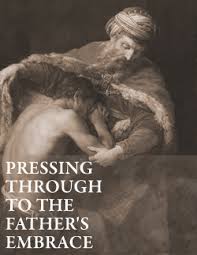
THE OFFENCE OF GRACE Gal 5:11 Brothers, if I am still preaching circumcision (viz.The Law), why am I still being persecuted? In that case the offense of the cross has been abolished. The cross heralded in a new system in which we are called to live - that of God's Grace. Grace is scandalous. It’s hard to accept, hard to believe, and hard to receive. Grace shocks us in what it offers as it defies our judgement based on logic. It is truly not of this world - It frightens us with what it does for Sinners. Grace teaches us that God does for others what we would never do for them. We would save the “not-so-bad”. But God starts with prostitutes and then works downward from there. Grace is a gift that costs everything to the Giver,Jesus, and nothing to the Receiver, the Sinner. It is given to those who don’t deserve it, barely recognize it, and hardly appreciate it. That’s why God alone gets the glory for our salvation that is by Grace alone (Eph.2:8). Jesus did all the work when he died on the cross... "It is finished" He said!(Jn.19:30) Grace focuses on Jesus work and performance, not ours.

SO WHAT IS GRACE The Greek dictionary definition for Grace show us what a beautiful thing Grace is. GRACE: G5485 χάρις CHARIS: Thayer Definition: 1) grace 1a) that which affords joy, pleasure, delight, sweetness, charm, loveliness: grace of speech. 2) good will, loving-kindness, favour. 2a) of the merciful kindness by which God, exerting his holy influence upon souls, turns them to Christ, keeps, strengthens, increases them in Christian faith, knowledge, affection, and kindles them to the exercise of the Christian virtues. 3) what is due to grace. 3a) the spiritual condition of one governed by the power of divine grace. 3b) the token or proof of grace, benefit. 3b1) a gift of grace. 3b2) benefit, bounty. 4) thanks, (for benefits, services, favours), recompense, reward. It is closely related to the following foundational word: G5463 χαίρω chairō: 1) to rejoice, be glad. 2) to rejoice exceedingly. 3) to be well, thrive. 1. Grace is God’s unmerited, unearned, undeserved favour towards us. 2. It’s our unearnt, unconditional blessing from God. 3. It is God’s goodness to us. 4. It’s His unconditional, freely given, love for us. 5. It is God’s empowerment of us by His Spirit. 6. It is God’s riches at Christ expense. 7. Ultimately Grace is not a doctrine but a person: Jesus Christ. The controversy is not over the definition of Grace. It’s the application of Grace that leads to controversy as most people accept they are saved by Grace but they don't know how to live in it.

THE TEN COMMANDMENTS & THE LAW HIGHLIGHT OUR NEED FOR GRACE Rom.5:20-21 Moreover the law entered that the offence might abound. But where sin abounded, grace abounded much more. This refers to the laws given to Moses – primarily the ten commandments. The Law demands that we keep all it's 613 laws, perfectly, all the time (Deut 28) ! Shockingly impossible: Exactly….”HELP LORD!” These laws simply add to our transgressions, showing us even more clearly our need for Grace and to be saved by Jesus. We all blow it in some way, all the time! We all fall short. We all sin, despite not wanting to. In response God has provided us with super-abounding Grace (GK: huperperisseuo G5248)(Jn.4:16). i.e. More grace and forgiveness than we actually need. He gives us enough Grace for our sins plus even more for our blessing. Jesus' Grace does not set aside the Law, but rather completely satisfies and fulfills it. (Matt.5:17) As deep as sin goes, God’s Grace goes deeper. As wide as sin is, God’s Grace is wider. When sin abounds, Grace super-abounds. God’s Grace is greater than all our sin. Sadly, performance orientated Christianity has made us double minded. We were all been taught to "perform" - since childhood in our own families. When we are good we are in Grace and can receive love and blessing. But when we are bad we fall from Grace. Satan loves this belief as all he has to do is tempt us into sin and then accuse us when we fail. When we fail and sin we then separate ourselves from God and reject His call on our lives! Instead God is calling us to focus on our righteousness in Christ. We are called to live a life that is holy and righteous and the ten commandments set a standard. However the Ten Commandments imposed on us from the outside just leads to condemnation due to failure on our part. Jesus came to reveal a new way, the way of the Spirit who guides us to do what is right (Heb.10:16). We now live by love, not by the Ten Commandments, as those who love keep them because of their new nature (Rom.13:8-10) and the leading of God's Spirit within.

WE ARE RIGHT WITH GOD, BY GRACE, NOT BY OUR PERFORMANCE. Right living only comes about through right believing. As we believe so we become. If we believe we live in grace, so grace will flow from us to others. If we believe we believe the core of our relationship is to obey then we will be driven & restless and doomed to failure and condemnation. Grace is good news, Law based living is bad news, as we always fail. Obedience based Christianity is no difference from Israel’s Law based religion.
“GRACE & PEACE” WAS THE CHURCH'S GREETING Rom.1:7 To all in Rome who are loved by God and called to be saints: Grace and peace to you from God our Father and from the Lord Jesus Christ. 2Co.5:19 God was reconciling the world to himself in Christ, not counting men’s sins against them. In the New Covenant grace and peace are linked. Through Jesus the Father sends us peace. What is this peace that is so linked to Grace? PEACE: G1515 εἰρήνη eirēnē Thayer Definition: 1) a state of national tranquillity 1a) exemption from the rage and havoc of war. 2) peace between individuals, i.e. harmony, concord. 3) security, safety, prosperity, felicity, (because peace and harmony make and keep things safe and prosperous) 4) of the Messiah’s peace 4a) the way that leads to peace (salvation). 5) of Christianity, the tranquil state of a soul assured of its salvation through Christ, and so fearing nothing from God and content with its earthly lot, of whatsoever sort that is. 6) the blessed state of devout and upright men after death. Our every day & relationships should be full of grace and the fruit which is peace. Through their greetings the early church constantly reminded each other of grace. Virtually every New Testament letter contains a greeting and farewell focusing on grace. If we want peace in our lives we have to live in God’s grace. Understanding grace leads to inner peace. We are no longer at war with God – we have peace with him through grace.
Jesus' Grace is really good news.
Tel: +27 (0)31 7642323 Cell: 0845562786 Email: garryhare@gracelovetruth.com
GOD'S POSITIVE ABOUT YOU
For all the negative things we have to say to ourselves,
God has positive answers:
You say: “It’s impossible.” God says: All things are possible. (Luke 18:27)
You say: “I’m too tired.” God says: I will give you rest. (Matthew 11:28-30)
You say: “Nobody really loves me.” God says: I love you. (John 3:16 & John 13:34)
You say: “I can’t go on.” God says: My grace is sufficient. (II Corinthians 12:9 & Psalm 91:15)
You say: “I can’t figure things out.” God says: I will direct your steps. (Proverbs 3:5-6)
You say: “I can’t do it.” God says: You can do all things. (Philippians 4:13)
You say: “I’m not able.” God says: I am able. (II Corinthians 9:8)
You say: “It’s not worth it.” God says: It will be worth it. (Roman 8:28)
You say: “I can’t forgive myself.” God says: I FORGIVE YOU. (I John 1:9 & Romans 8:1)
You say: “I can’t manage.” God says: I will supply all your needs. (Philippians 4:19)
You say: “I’m afraid.” God says: I have not given you a spirit of fear. (II Timothy 1:7)
You say: “I’m always worried and frustrated.” God says: Cast all your cares on ME. (I Peter 5:7)
You say: “I don’t have enough faith.” God says: I’ve given everyone a measure of faith. (Romans12:3)
You say: “I’m not smart enough.” God says: I give you wisdom. (I Corinthians 1:30)
You say: “I feel all alone.” God says: I will never leave you or forsake you. (Hebrews13:5)
God wants you to depend on Him and draw your strength from Him – you are His beloved

ZACCHAEUS & THE RICH RULER

DO WE PREACH GRACE OR LAW?
Two linked Bible stories reveal the differences between the effect of The Law and the effect of Grace.
(Lk 18:18) A certain ruler asked him, “Good teacher, what must I do to inherit eternal life?”……. (Lk 19:2) A man was there by the name of Zacchaeus; he was a chief tax collector and was wealthy. He wanted to see who Jesus was………
It is not by coincidence that these two stories almost directly follow each other in The Scriptures!
1) WHY DID JESUS PREACH RELIGIOUS LAW TO SOME AND GRACE TO OTHERS?
God gives The Law to the Self-Righteous while to the humble and lost He shows Grace.

Jesus understood that The Law was given to expose Self-Righteousness and for bringing people to an end of themselves. This is the only reason Jesus preached The Law, he never preached The Law to condemn people. The Jewish Teachers of Jesus’ day had totally misunderstood the purpose of The Law of Moses (The ten commandments+). They used it for the exact opposite purpose for which it was intended. They taught that people could be saved and holy by obeying The Law.
In contrast Jesus preached The Law to show that no one could ever be saved by keeping The Law and that all fall short, all have sinned and all need a Saviour and Grace. Jesus never preached the Ten Commandments as an external moral code for man to live by or a way of obtaining Righteousness. Jesus knew that these things could only come about through a heart transformed by Grace.
Let’s be honest, we all would like to keep the Ten Commandments, but the truth is that we all blow it, no matter how hard we try.
The good news is that under The New Covenant, our role is to recognize that we fall short of God’s holiness standard, we therefore rely on God’s Grace and find rest in Christ from The Law. The Law just brings us terrible condemnation and death (2Cor.3:7-9) so we need to get free from it.
It is only from position of Grace that we are able to live in the way God desires: a loving, generous, holy life full of the fruit of the Spirit. Right living flows from a heart that is full of Grace, it can never come about by trying to obey The Law.
Traditionally we have been taught that Jesus preached Laws for believers to aspire to and live by. However we have missed the truth that both Jesus and Paul used The Law in a different way, in the way for which it was originally intended i.e. to expose the sin of Self-Righteousness, pride and the sin of unbelief. Moral sin flows out of unbelief, moral sin is the fruit of man’s pride and independence from God.
This misunderstanding of the purpose of The Law has led to confusion in the Church and has resulted in an erroneous deadly mixture of Law and Grace that has produced terrible fruit in many Christian lives.
Looking at the two parables of the Rich Ruler and Zacchaeus help us understand how Jesus correctly applied Law and Grace with amazingly different results.
2) THE RICH RULER & THE LAW (Lk.18:18-24).
This parable typifies the Principle that to the Self-Righteous Jesus always preached The Law.

Luke 18:18 A certain ruler asked him, “Good teacher, what must I do to inherit eternal life?”19 Why do you call me good?” Jesus answered. “No one is good—except God alone. 20 You know the commandments: ‘Do not commit adultery, do not murder, do not steal, do not give false testimony, honor your father and mother.’”21 “All these I have kept since I was a boy,” he said. 22 When Jesus heard this, he said to him, “You still lack one thing. Sell everything you have and give to the poor, and you will have treasure in heaven. Then come, follow me.”23 When he heard this, he became very sad, because he was a man of great wealth. 24 Jesus looked at him and said, “How hard it is for the rich to enter the kingdom of God!
The key context
Luke 18:9 Jesus spoke this parable to men who trusted in themselves that they were righteous, and despised others.
Firstly, To enable us to fully understand what issue is actually being addressed it is very important to establish and interpret scripture in its context. A scripture taken out of context can be a con.
The context of these two stories is that Jesus was exposing the primary sin of pride and self-righteousness and was starting to reveal Grace to Israel.
Jesus knew that exposure of Self Righteousness is crucial, as the Self Righteousness deny the need for salvation…. after all who needs to be saved if they are righteous (in right standing with God) through their own efforts. Self-Righteousness is the ultimate manifestation of man’s pride, man’s self sufficiency and the Fallen nature of Mankind.
The issue of Righteousness by self effort or Righteous by Grace is in fact the key theme of Scripture, it is crux of the Cross and is one of the keys to fully understanding the Kingdom and the ministry of the Holy Spirit (Rom.14:17).
Points from the story of the Rich Ruler.
Jesus’ intent in this encounter was not to give us another impossible Law to obey “You must sell everything and give all your money to the poor”. Jesus was actually exposing Self-Righteousness and the bondage to money from which self-sufficiency and self-righteousness often flows.
Jesus was responding to a very specific question (v18) from a self-sufficient and rich Ruler who asked: “What must I do to inherit Eternal Life?”.
The Rich Ruler’s question reveals the foundations of Self-Righteousness i.e. Self Effort. This trait happens to be particularly pertinent to the Rich because they are self- sufficient, able and “Doers” based on:-
- The erroneous and arrogant belief that we are able “ to do” things that make us worthy, holy and sufficiently qualified to spend eternity with God.
- The assumption that we are good and don’t need a Saviour and God’s Grace.
- The belief that we can obey laws and keep The Law to the perfect degree that God’s Holy Law demands.
Jesus’ usual response to people wanting to ‘do things’ to get saved was to preach The Law in an extreme form. In this case it was “Go and sell everything, give it to the poor and follow me“. Jesus knew that the Rich Ruler believed he was good, able and righteous. Jesus also knew that he was obsessed with money. Despite his claim of having kept The Law since childhood, through his money making he had actually repeatedly broken the Law “Thou shalt not covet”. Sadly the Rich Ruler was blind to this fact.
If this Rich Ruler was ever to repent and be saved In response Jesus had to first reveal the Rich Rulers Self-Righteousness, spiritual blindness and bondage to money.
What is interesting is the actual affect the preaching of Law actually had on the Rich Ruler. Did he repent? No! Instead he hardened his heart and turned away from Jesus because he realised he could not DO what The Law required. In a way it seems like a strange story. No one was saved, no one repented and no one followed Jesus. However it needs to be said that firstly, the Rich Ruler missed the point of Jesus’ teaching. Secondly, not everyone is saved and The Lord gives us freewill to turn away if we choose. Thirdly, the sermon was not wasted as the listening crowd understood what was being taught and responded in the right way to Jesus’ teaching. The response Jesus was looking for was actually for people to understand their precarious position and cry out for Grace.
Lk 18:26 Those who heard this asked, “Who then can be saved?” Jesus replied, “What is impossible with men is possible with God.”
Lessons from the Rich Ruler
- Self-Righteousness is a strong bondage which spiritually blinds people.
- The religious-rich are particularly prone to Self-Righteousness.
- No one can save themselves by keeping The Law.
- Law preaching results in condemnation and turning away from Jesus.
- Law preaching just reinforces how much we fall short and fail.
- Preaching The Law doesn’t get people saved.
- Preaching The Law does not lead to repentance.
Thankfully Jesus also didn’t leave us with just this story as He desired to teach us what happens when we preach The Law and what happens when we share Grace. The teaching continues and He reveals the way of Grace in the very next chapter. And thank God the results are astoundingly different!
3) THE RICH TAX COLLECTOR AND GRACE
Luke 19:2 A man was there by the name of Zacchaeus; he was a chief tax collector and was wealthy. 3 He wanted to see who Jesus was, but being a short man he could not, because of the crowd. 4 So he ran ahead and climbed a sycamore-fig tree to see him, since Jesus was coming that way. 5 When Jesus reached the spot, he looked up and said to him, “Zacchaeus, come down immediately. I must stay at your house today.”6 So he came down at once and welcomed him gladly. 7 All the people saw this and began to mutter, “He has gone to be the guest of a “sinner.’” 8 But Zacchaeus stood up and said to the Lord, “Look, Lord! Here and now I give half of my possessions to the poor, and if I have cheated anybody out of anything, I will pay back four times the amount.” 9 Jesus said to him, “Today salvation has come to this house, because this man, too, is a son of Abraham. 10 For the Son of Man came to seek and to save what was lost.”

The context.
The rich man in this story is called Zacchaeus which means “an Israelite”. He was a Jew just like the Rich Ruler and as such he was also under the Law of Moses. Zacchaeus was a very rich Jewish Tax collector who worked for the Romans. These tax collectors exploited and defrauded the Jewish people and they were intensely hated. The Jews considered him to be a traitor, a sinner and unclean (v7) -no one would associate with him.
Points from the story of Zacchaeus
What is crucial in this story is for us to see that Zacchaeus was desperate to encounter Jesus. This desperation for Jesus is what determines Jesus’ actions and response to Zacchaeus. Unlike the Rich Ruler, Zacchaeus’ focus was not on ‘what he should do’ but on who Jesus was. This rich man humbled himself and climbed a tree just so he could see Jesus. This must have been quite a sight and quite an effort for this short man. Jesus’ response to the rotten and corrupt Zacchaeus was pure love and Grace.
(v5) “ Zacchaeus, come down immediately. I must stay at your house today.”
This was amazing as Jesus knew that Zacchaeus was despised and a “sinner”. Jesus also knew that his offer to go to Zacchaeus’ house would offend people as Zacchaeus was a Jew, under the Law and clearly a Law breaker. However in stark contrast to Jesus’ response to the Rich Ruler:-
- Jesus never preached The Law to Zacchaeus.
- Jesus never once pointed out his sin or that Zacchaeus lacked anything.
- Jesus never indicated that He required Zacchaeus to do anything.
- He never condemned Zacchaeus in any way.
- Jesus simply showed him Grace and acceptance – by coming to his house to eat.
The affect of Jesus’ Grace and acceptance is nothing short of miraculous and is in stark contrast to the Rich Ruler who turned away from Jesus:-
- Zacchaeus is overwhelmed by Jesus’ Grace
- He welcomed Jesus and was full of joy (v6).
- He received salvation through Jesus (v9&10).
- The kindness of Jesus causes him to repent of his sinful way of life (v8).
- He was contrite and humble of heart and confessed his sin.
- Without being told what to do, his heart led him to do what was right (eous).
- He was set free from his bondage to money.
- He showed a heart for the poor and needy.
- He set out to make right the affects of his past sins.
It must be clearly understood that it is not his actions of giving away his money that gained him salvation and righteousness. Giving his money away was the result of his meeting Jesus, experiencing Grace and receiving salvation. True salvation and Grace always results in a transformed character and Godly good works that are from the heart.
Lessons from Zacchaeus.
- When people seek Jesus He responds in Grace. Jesus is Grace!
- Jesus shows Grace to those who are humble and not Self-Righteous.
- When we share Grace, unconditional love and acceptance, people will be saved.
- It’s the kindness of God that leads to repentance, not the Law.
- People don’t need the Law to know that they are sinners and fall short in some way.
- Repentance is a change of mind, a change of belief which results in a change of actions.
- True ‘good works’ come from a heart transformed by Grace.
- A heart touched by Grace will show concern for the oppressed and needy.
4) CONCLUSION
Preaching Religious Laws exposes peoples short coming but it doesn’t bring people to salvation.
There is a better way than preaching Law- it’s the way of revealing God’s love and Grace through Jesus Christ!
Not only does the Grace of Christ bring people to salvation but it transforms people’s characters and enables them to live Righteously.

HEALTH THROUGH JESUS' REST

OUR REST AND HEALTH IN CHRIST
Heb 4:11 Let us, therefore, labour (KJV) to enter God’s rest
THE PEACE & JOY KINGDOM
Understanding that we are Righteous – in right standing with, and accepted by God – by faith and not because of what we do, or fail to do, results in an inner joy and peace as we hope for and expect blessings from a good and kind God.
Rom 14:17 For the kingdom of God is not a matter of eating and drinking, but of righteousness, peace and joy in the Holy Spirit……
Rom 14:13 May the God of hope fill you with all joy and peace as you trust in him, so that you may overflow with hope by the power of the Holy Spirit.
REST AND HEALTH THROUGH GRACE
The only thing that believers are called to strive and labour for in the New Covenant is inner rest that comes through the Grace of Christ.
Depression and sickness are major fruits of today’s work, success and perfection focussed society.
Depression is affecting many Christians who are not living in Grace and who are instead works, obedience and law orientated and therefore doomed to fall short all the time.
Living by the soul is living by the intellect and logic which leads to striving and worry.
There is a higher way of living by the Spirit which leads to inner rest.
Heb 4:11 Let us, therefore, labour (KJV) to enter that rest, so that no one will fall by following their example of disobedience. 12 For the word (Logos) of God is living and active. Sharper than any double-edged sword, it penetrates even to dividing soul and spirit, joints and marrow; it judges the thoughts and attitudes of the heart.
JESUS SETS US FREE FROM THE LAW’S OPPRESSION
Jesus came to set us free from the bondage of living by the flesh, trying to fulfil the law which leads to oppression.
Jesus came to proclaim the good news of Grace and God’s dispensation of unearned favour for all who would believe.
Luk 4:18 “The Spirit of the Lord is on me, because he has anointed me to preach good news to the poor. He has sent me to proclaim freedom for the prisoners and recovery of sight for the blind, to release the oppressed.
BELIEVING IN GOD’S GOODNESS (NUM.13:23)
Israel’s unbelief and distrust of God (Num.13:23) prevented them from receiving their blessing and rest.
Likewise, the major battle within us is against unbelief.
Unbelief causes us to doubt God’s good intentions and love for us – it was the original sin.
Unbelief is the sin that the Holy Spirit convicts of (John 16:9).
Heb 3:12 See to it, brothers, that none of you has a sinful, unbelieving heart that turns away from the living God.
LINK BETWEEN GRACE REST & HEALTH
There is a direct medical link between the lack of inner peace and rest and stress.
Perfectionism, works and obedience orientated Christian living is stressful as it’s always focussing on our sin and short comings.
Knowing and accepting that all our sins are forgiven and that we are righteous through Jesus will produce good mental and physical health.
Sin focussed Christianity leads to condemnation, guilt, shame, anxiety and sickness.
Rom 4:7 “Blessed are they whose transgressions are forgiven, whose sins are covered. 8 Blessed is the man whose sin the Lord will never count against him.” ……. comes from: Psa 32:1 Blessed is he whose transgressions are forgiven, whose sins are covered. 2 Blessed is the man whose sin the LORD does not count against him and in whose spirit is no deceit. 3 When I kept silent, my bones wasted away through my groaning all day long. 4 For day and night your hand was heavy upon me; my strength was sapped as in the heat of summer. 5 Then I acknowledged my sin to you and did not cover up my iniquity. I said, “I will confess my transgressions to the LORD”— and you forgave the guilt of my sin.
Heb 4:11 Let us, therefore, labor (KJV) to enter that rest, so that no one will fall by following their example of disobedience. 12 For the word (Logos) of God is living and active. Sharper than any double-edged sword, it penetrates even to dividing soul and spirit, joints and marrow; it judges the thoughts and attitudes of the heart.
THE TREADMILL OF SELF WORKS AND THE SICKNESS CYCLE
When one cannot accept God’s grace, forgiveness and love, then we cannot believe we are truly God’s beloved children and blessed.
When our identity is based on what we do instead of the finished work of the cross, we are insecure in our identity.
UNCERTAINTY OF IDENTITY -> LACK OF GRACE TO SELF -> UNBELIEF -> FEAR -> ANXIETY
->CONTROL-> PASSIVITY OR BUSYNESS -> LAWS & RULES -> JUDGMENTS
EMOTIONAL AFFECTS -> Resentment. Bitterness. Anger / Frustration. Negativity. Panic.
PHYSICAL AFFECTS : Chemical imbalances leading to…. JOINT PROBLEMS. DEPRESSION (anger turned inward). HEART ISSUES. GASTRIC ILLNESS. CANCERS (Self hate & rebellion)
THE WAY OUT
Rom 4:5 However, to the man who does not work but trusts God who justifies the wicked, his faith is credited as righteousness.
Rely on Jesus, see yourself as he is. Fix your eyes on Him……

WHAT IS LEGALISM

Legalism, in Christian theology, is a usually pejorative term referring to an over-emphasis on discipline of conduct, or legal ideas, usually implying an allegation of misguided rigour, pride, superficiality, the neglect of mercy, and ignorance of the grace of God or emphasizing the letter of law at the expense of the spirit. Legalism is alleged against any view that obedience to law, not faith in God’s grace, is the pre-eminent principle of redemption.
In the New Testament
The words ‘legalism’ or ‘legalist’ do not occur in the Old or New Testaments. Legalism’s root word, “law” (Greek nomos), occurs frequently in the New Testament, and sometimes connotes legalism. The Greek of Paul’s day lacked any term corresponding to the distinct position of “legalism”, “legalist”, or “legalistic”,
One concept of legalism, the belief that salvation can be earned by obedience to laws, is referred to in various New Testament books, including Galatians. In this case, some Jews who had become Christians believed that in order to obtain salvation, both faith in Christ (as Messiah), and obedience to the Mosiac laws were required, such as the cases of the circumcision controversy and the Incident at Antioch. Generally, however, these cases are referred to as the Judaizer controversy, rather than a legalism controversy, but the two are related.
Legalism refers to any doctrine which states salvation comes strictly from adherence to the law. It can be thought of as a works-based religion. Groups in the New Testament said to be falling into this category include the Pharisees, Sadducees, Scribes, Judaizers, and Nicolaitans. They are legalists because they emphasized obeying the Law of Moses, in the case of the Pharisees and Scribes, to the letter without understanding the concept of grace. Jesus condemned their legalism in Matthew 23. The Pharisees love of the praises of men for their strict adherence is said to be a prime example of legalism.
Legalism is sometimes confused with obedience. New Testament books such as Romans, speak of grace and obedience together. An example is found in Romans 1:5 (New American Standard Version) speaking of Christ ‘through whom we have received grace and apostleship to bring about the obedience of faith among all the Gentiles, for His name’s sake…’ The goal of receiving the grace was to bring about obedience of faith. Here grace, faith and obedience are tied together. Other references are in Acts 5:29, 32; Romans 16:19; 2 Corinthians 7:15; Hebrews 5:9.
Legalism is also confused with discipline, which is often spoken of in a positive light. See 1 Corinthians 9:17; 1 Timothy 4:7; 2 Timothy 1:7 and Hebrews 12:5–11.
A third common misunderstanding of legalism is the word law. Law in many places in the Bible refers to the Law of Moses, see also Biblical law in Christianity. In Galatians the Judaizers were trying to insist that salvation required that a person be circumcised prior to obeying the Law of Christ. Galatians 2:16 says, “Knowing that a man is not justified by the works of the law, but by the faith of Jesus Christ, even we have believed in Jesus Christ, that we might be justified by the faith of Christ, and not by the works of the law: for by the works of the law shall no flesh be justified” (King James Version). The faith here is the Law of Christ and the law here is the Law of Moses. The legalism of the Judaizers was that obedience to the law of Moses was necessary to be saved